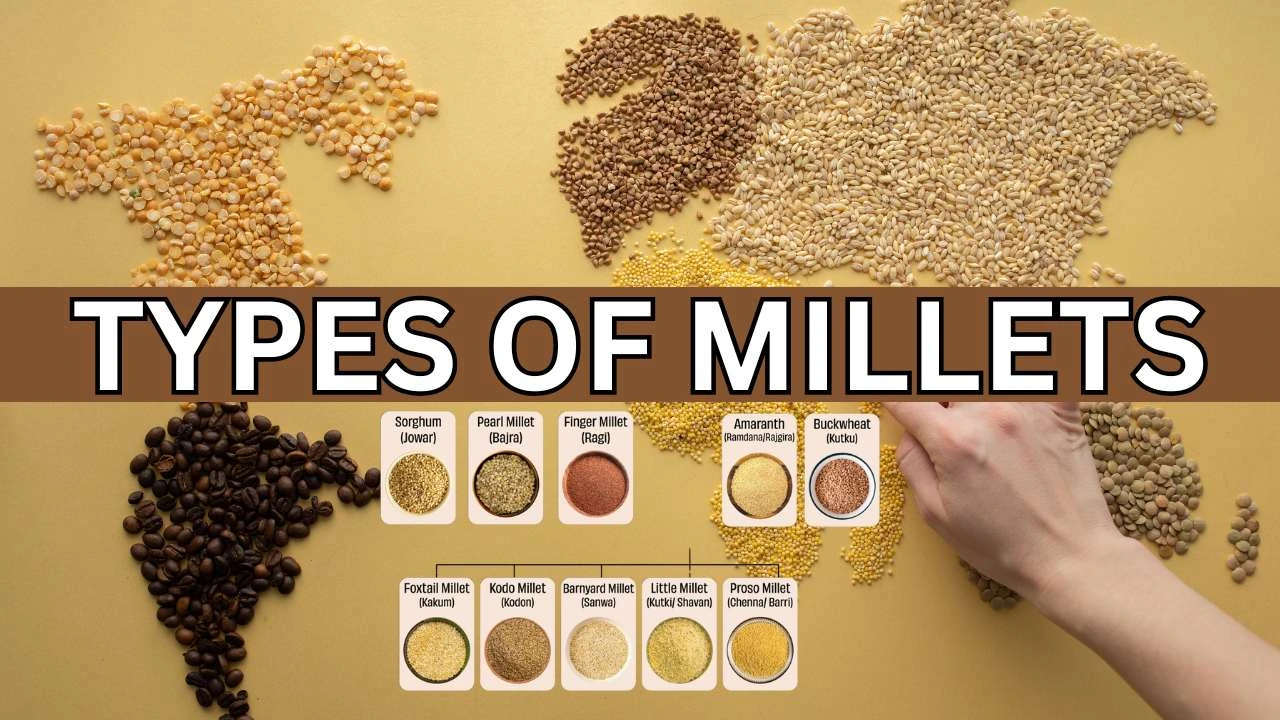
With the growing global trend towards healthier diets and sustainable food choice, one superfood that has gained popularity are Millets. Many of you may wonder what millets are and how they are used. Millets are a common food staple in Asia and Africa. As per the current studies, the developing countries have 97% of millet production. Types of Millets: Millets are small seeded grasses that are primarily produced as grains or cereal crops. Millets are ancient grains that are highly productive due to their resilience to high temperature and short growing seasons. Millets have different varieties like pearl, proso, sorghum, foxtail and many more.
Types of Millets
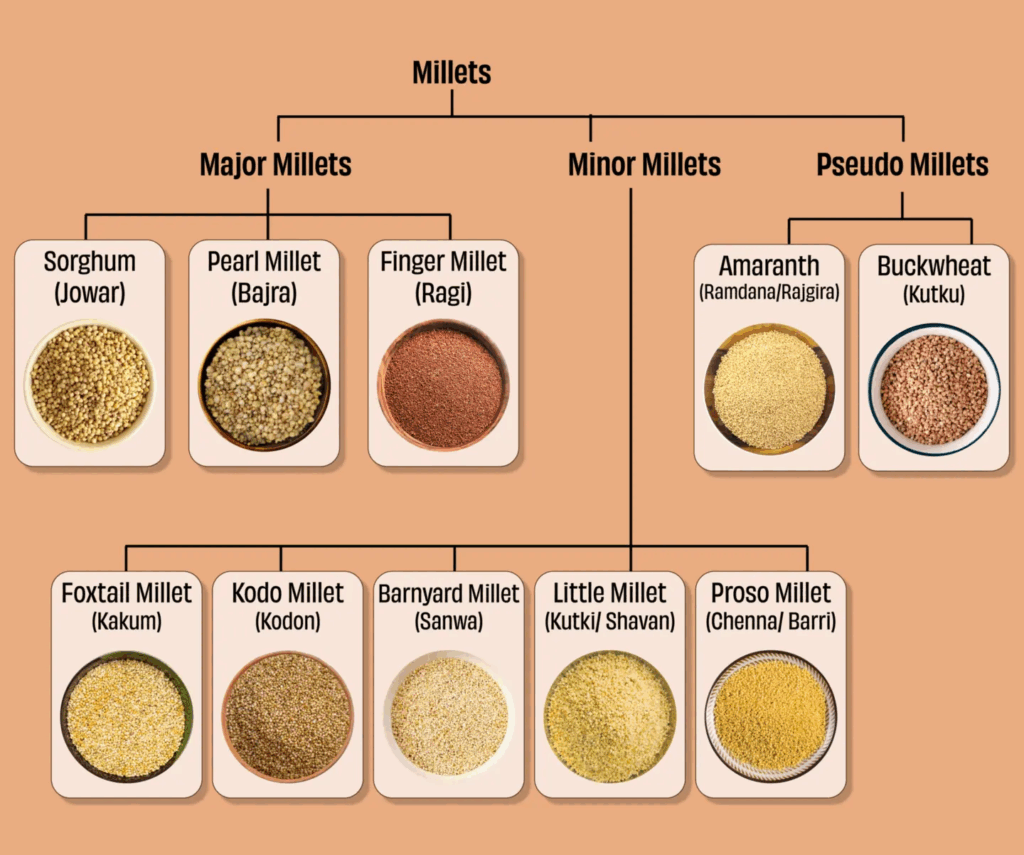
In India, the 8 varieties of millet are produced which are Sorghum, Finger, Pearl, Foxtail, Proso, Kodo, Little, Barnyard millet. Let’s see distribution of Millets in Indian states:
Type of Millet
Producing State
Pearl Millet, Sorghum
Rajasthan, Gujarat
Sorghum
Telangana, Maharashtra, Andhra Pradesh
Finger Millet
Tamil Nadu, Gujarat, Minor Crop in Telangana
Regional Names of Millets In India
English
Finger Millet
Proso Millet
Sorghum
Little Millet
Foxtail Millet
Kodo Millet
Pearl Millet
Sanskrit
Nandimukhi, Madhuli
Chińa
–
–
Kanguni
Kodara
–
Hindi
Mandua
Barre
Jowar
Kutki
Kangni, Kakum
Kodon
Bajra
Kannada
Ragi
Baragu
Jola
Same
Navane
Harka
Sajjai
Telugu
Ragulu
VariguluVargalu
Jonna
Samalu
Korra, Korralu
Arikelu, Arika
Sajjalu
Tamil
Kelvaragu
Panivaragu
Cholam
Samai
Tenai
Varagu
Kamboo
Malayalam
Moothari
Panivaragu
Cholam
Chama
Thina
Varagu
Kamboo
Gujarati
Nagli, Bavto
Cheno
Juar
Gajro, Kuri
Kang
Kodra
Bajri
Marathi
Nachni
Vari
Jcwari
Sava
Kang, Rala
Kodra
Bajri
Punjabi
Mandhuka, Mandhal
Cheena
–
Swank
Kangni
Kodra
Bajra
Bengali
Mandua
Cheena
Juar
Kangani
Kaon
Kodo
Bajra
SorghumHealth Benefits
Sorghum is naturally gluten free which means it’s a safe grain for those who experienced celiac disease.
Its high fiber content helps in obesity prevention.
Sorghum has a low glycemic index and this helps in lower blood sugar.
Sorghum regular consumption will lower the risk of Cardiovascular Diseases.
Certain compounds like anti-carcinogenic compounds can lower the risk of oesophageal cancer.
Antioxidants in sorghum combat oxidative stress.
Pearl Millet Benefits
Pearl Millet has alkaline properties that soothe acidity and helps to heal stomach ulcers.
It’s recommended for Heart health due to high magnesium content.
High levels of phosphorus present in pearl millet can help in bone growth and repair.
Helps in weight loss.
Effective for people having Diabetes.
It’s gluten free which means it’s a safe grain for those who experienced celiac disease.
Helps in lowering Cholesterol levels.
Pearl Millets includes Amino acids.
Finger Millet Health Benefits
Helps in controlling Diabetes.
Good to lower Blood Cholesterol.
Consumption of Finger Millet in Anaemia is recommended as it has iron.
Best used for migraines, insomnia, depression or anxiety.
Consume it for protein and amino acids.
Small Millets Health Benefits
Lowers Blood sugar
Lower cholesterol
Good for those who have Gastric problems.
Lowers risk of Heart Attack
Helps in Body Tissue Development
Helps in Energy Metabolism.
High Antioxidants
Millets Nutritional Value
Nutrient
Pearl Millet
Foxtail Millet
Barnyard Millet
Proso Millet
Kodo Millet
Finger Millet
Brown Top
Little Millet
Protein (g)
11.6
12.3
6.2
12.5
8.3
7.3
8.89
7.7
Fiber (g)
1.3
8
10.1
2.5
9.3
3.6
7.3
7.6
Calcium (mg)
42
31
20
14
27
344
28
17
Iron (mg)
2.8
1.1
15
3.8
0.6
3.9
7.72
9.3
Zinc (mg)
1.7
1.1
0.4
1.7
1.2
2.8
2.5
1.2
Phosphorous (mg)
285
258
293
277
189
283
276
189
Thiamine (mg)
0.27
0.59
0.33
0.41
0.15
0.42
–
0.15
Niacin (mg)
0.89
3.2
4.2
4.6
2.1
1.1
–
2.1
Riboflavin (mg)
0.15
0.11
0.11
0.28
0.09
0.19
–
0.09
Fiber (g/100g)
8
8
6
3
9
15
9
7
FAQ Related To Types of Millets
Are millets Gluten free?
Yes, Sorghum and Pearl millets are gluten free.
Are millets healthy?
Yes, Millets are healthy as they are rich in fiber, proteins, antioxidants, iron and more.